BYLINE:
Syed Ikram
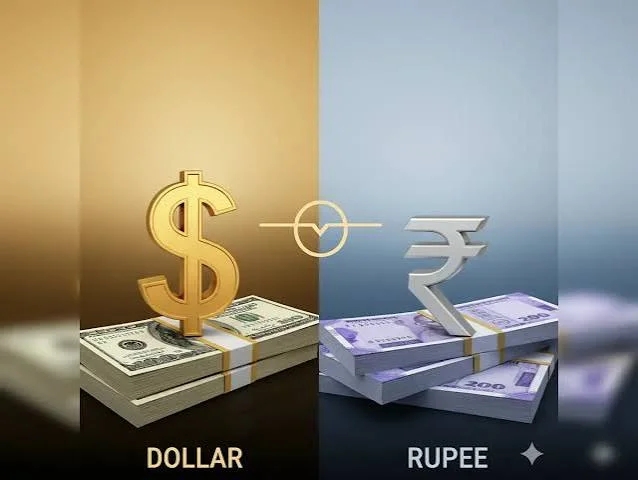
In 2014, a dollar cost about ₹61. On 23 October 2026, the rupee closed at ₹94.93, after touching nearly ₹97 earlier in the month.
Put simply: a dollar now costs about 56 percent more rupees than it did in 2014. Seen the other way round, the rupee has lost about 36 percent of its value against the dollar.
In 2013, as Gujarat Chief Minister, Narendra Modi said the rupee was "in the hospital," and argued that a falling currency reflected on the dignity of the government in Delhi. Thirteen years later, the rupee is far weaker than it was then. So it is fair to ask the question that 2013 politics made central: what has the fall cost Indians?
The honest answer is more interesting than either the government or the opposition would like.
The exchange rate, in five numbers
- 2014: about ₹61 to the dollar
- 2024-25 average: ₹84.57
- 2025-26 average: ₹88.31
- May 2026 average: ₹95.60
- 23 October 2026: ₹94.93
The government told Parliament the rupee fell about 9 percent in 2025-26 alone. That last stretch matters, as we will see.
What Indians paid extra on imports
In 2025-26, India imported goods and services worth $979.4 billion and exported $860.1 billion, leaving a trade deficit of $119.3 billion.
Every dollar of imports now costs ₹27.31 more than it would have at the 2014 rate (using the 2025-26 average of ₹88.31). Applied to a full year of imports, that is about ₹26.7 lakh crore in extra rupees paid out.
Two items dominate:
- Petroleum imports of $173.6 billion: about ₹4.7 lakh crore extra in a single year.
-Gold imports of $72.4 billion: about ₹2 lakh crore extra.
What exporters gained
The same arithmetic runs in reverse for anyone earning dollars. On $860.1 billion of exports, India's exporters received about ₹23.5 lakh crore more than they would have at the 2014 rate. The biggest single winner is the services sector — IT, consulting, back offices — which exported $418.3 billion in 2025-26.
The net bill
Subtract one from the other and the net exchange-rate cost of India's trade deficit in 2025-26 comes to about ₹3.26 lakh crore. That is roughly 0.9 percent of GDP, or around ₹2,250 for every Indian.
But that is not the full picture either. Indians working abroad sent home a record $110.5 billion in 2025-26. At the weaker rupee, their families received about ₹3 lakh crore more than they would have at the 2014 rate.
In other words, on 2025-26 flows, the extra rupees flowing to remittance households roughly offset the net exchange-rate cost of the trade deficit. The country did not simply lose ₹26.7 lakh crore. Money moved — from people who buy imports to people who earn dollars.
Why "₹61 versus ₹95" overstates the loss
Here is the part most political arguments skip.
A rupee in 2014 bought more partly because Indian prices were lower. Indian inflation has run higher than inflation in the United States and India's other trading partners for years. When your prices rise faster than theirs, your currency falling against theirs is partly just keeping score.
Economists correct for this with the Real Effective Exchange Rate (REER), which measures the rupee against 40 trading-partner currencies after adjusting for inflation. On the RBI's index, a reading above 100 means the rupee is overvalued.
In November 2024, the rupee's REER stood at 108. In other words, after a decade of nominal decline from about ₹61 to about ₹84, the rupee was still overvalued in real terms. Most of that long slide was inflation, not collapse.
Where the real damage happened
The genuine weakening is recent — and fast. The REER fell from 108 in November 2024 to 89 by May 2026: a real drop of about 17.5 percent in eighteen months. The rupee went from overvalued to undervalued.
The drivers are not mysterious:
-Oil. The West Asia conflict pushed crude above $100 a barrel. India's crude import bill jumped 46 percent to $90.6 billion in April–September 2026, and in rupee terms the April–August bill rose 62 percent to over ₹7 lakh crore. Each barrel got more expensive in dollars, and each dollar more expensive in rupees.
-Weak investment inflows. Net foreign direct investment totalled less than $9 billion across 2024-25 and 2025-26 combined — a thin cushion for a country with a widening deficit.
- A strong dollar. The dollar itself has strengthened against most currencies over the past decade, not just the rupee.
Who lost, who won
A falling rupee is not a single loss. It is a transfer.
Those who pay:
- Every household, indirectly, through fuel, transport and goods priced off imported oil.
- Students studying abroad and families paying their fees.
- Companies that borrowed in dollars without hedging.
- The government, through costlier fertiliser and energy imports.
Those who gain:
- IT and services exporters, whose dollar earnings now buy more at home.
- Exporters of textiles, pharmaceuticals and engineering goods, whose prices become more competitive abroad.
- Millions of remittance families, from Kerala to Kashmir, whose relatives' dollars and dirhams now go further.
The losers are spread across everyone. The winners are concentrated. That is why a falling rupee feels worse than the arithmetic alone suggests.
The politics
The opposition has spent years replaying Modi's 2013 remarks every time the rupee hits a new low. The government's answer, in a written reply to Parliament, is that the effect of depreciation on the oil import bill "cannot be isolated" from global prices and contracts, and that a weaker rupee can make Indian exports more competitive. It points to foreign exchange reserves of about $710 billion, enough to cover more than eleven months of imports.
RBI Governor Sanjay Malhotra goes further. He says that by several measures, including the REER, the rupee "is not overvalued; it may be undervalued," and that the RBI does not target any particular exchange rate.
Both sides have a point. The government is right that most of the decade-long fall reflects inflation differences, and that a cheaper rupee helps exporters. The opposition is right that the man who once treated the rupee as a measure of national dignity has spent little time explaining the record lows of 2026 to the public.
The verdict
So how much wealth has the rising dollar taken from Indians?
On a single year's trade, the exchange-rate effect costs India about ₹3.26 lakh crore net — a real cost, but one largely offset by what remittance families gain. Measured against inflation, the rupee was not in crisis for most of the past decade. The real erosion is the sharp fall of 2025-26, driven by an oil shock and weak investment, and it is ordinary households who absorb it through prices, without ever seeing a bill marked "exchange rate."
The rupee is not in the ICU. But it is not as healthy as the government's silence suggests. A country that imports most of its oil, attracts too little long-term investment and depends on remittances to balance its books has a currency that will keep falling whenever the world turns rough.
That is the conversation India should be having — not who said what in 2013.
How we calculated this
We took India's 2025-26 trade and remittance flows in dollars and multiplied them by the gap between the 2025-26 average exchange rate (₹88.31) and the 2014 level (about ₹61): a gap of ₹27.31 per dollar. This shows the extra rupees changing hands because of the exchange rate alone, holding dollar values fixed. It is an illustration, not an exact measure of loss: at a different exchange rate, trade volumes, prices and incomes would all have been different. Share of GDP uses an estimated 2025-26 nominal GDP of about $4.2 trillion; the per-person figure assumes a population of about 1.45 billion. "Remittances" here means workers' remittances only; total private transfers are higher.
Sources
- RBI reference rate, November 2014
- PTI via Deccan Herald — Rupee closes at 94.93, 23 October 2026
- Business Today — Rupee nears record low; RBI Governor on valuation
- PSU Watch / PPAC — Average exchange rates 2024-25, 2025-26, May 2026
- Ministry of Commerce data via TaxTMI — India's trade in 2025-26
- Business Today — Petroleum and gold import bills, 2025-26
- Vajiram & Ravi — Record remittances of $110 billion; weak FDI
- Askfuzz / Indian Express data — REER from 108 to 89
- ThePrint — Crude import bill April–September 2026
- Angel One / PPAC — Crude bill in rupee terms, April–August 2026
- TaxGuru — Government's written reply to Parliament on rupee depreciation
- The Wire — Modi's 2013 remarks on the rupee
- Business India — The politics of the falling rupee
────────────────────────────────────────
No reviews yet. Be the first to respond.